A Short History of Salem Straits
In brief
Salem Straits is a waterfront neighborhood on the Darien, Connecticut shoreline, developed beginning in the 1920s by William Ziegler, Jr. on land that had been part of his family's Great Island estate. It takes its name from the tidal estuary that colonial-era grain schooners from the Boston area used as a shortcut to the grist mill at Gorham's Pond — and its roads carry Boston-area and Harvard names: Beverly, Conant, Peabody, and Whaling. Under the original deed restrictions, homes were built of stone or brick; a shared beach and dock — “The Private Park” — were placed in trust for residents in 1929; and since about 1935 the neighborhood has been cared for through the Salem Straits Association. Building paused through the Depression and World War II and resumed afterward.
Timeline
1890s
William Ziegler buys Great Island and adjoining lands, developing a magnificent shorefront estate and farm.
c. 1918
The northeastern land is owned by Madge I. Hennan, with John Randall Munn to the north. Edward Delafield later buys the Munn property and William Ziegler, Jr. buys the Hennan property.
Early 1920s
William Ziegler, Jr. begins planning to develop the area — first envisioned as 4-acre lots.
1924
The first house in the neighborhood is built; soon after, the land is resurveyed into smaller lots of about ⅞ acre each.
April 1928
Roads and water lines are installed, the dam to Candlewood Island is built, and the estuary is dredged. The land is held by The Park Avenue Operating Co.
1928
A sales office opens on “the triangle,” and Salem Straits goes on the market.
1929
The beach and shore strip become “The Private Park,” placed in trust for residents by deed on July 19. The first Conant Place lots sell.
1931–32
The first houses rise on Conant Place.
c. 1935
The Salem Straits Association forms informally around a shared bank account for snow removal, roads, and beach and dock upkeep — the same system still in use.
1930s–1945
The Great Depression and World War II halt sales at eight houses; Whaling Road returns to woods.
After WWII
Thomas Robbins buys Candlewood Island and building resumes across the neighborhood.
1957
Don Wilson builds on the long-reserved shore lot just north of the beach.
c. 1958
The present 70-foot community dock is built — largely by residents themselves.
1959
Candlewood Island is divided and a new house is built on the second lot.
1963
The roads are widened and paved from the entrance through Peabody Lane.
1965
John Arthur Clarke buys about 11 acres on Whaling Road to develop.
The full story
Origins
Mr. William Ziegler bought Great Island and the adjoining lands in the 1890's and proceeded to develop it into a magnificent shorefront estate and farm. Part, but certainly not all, of the area now comprising Salem Straits was probably in the original Ziegler purchase, although some of it may have been acquired later, as Mr. Ziegler added to his original land from time to time.
The northeastern part of the present Salem Straits was owned up to about 1918 by Madge I. Hennan, and John Randall Munn owned property north of Hennan's. Edward H. Delafield bought the Munn property and added it to his extensive holdings along the shore of Scott Cove, and William Ziegler, Jr. bought the Hennan property.
The Zieglers put in first a path and then a road which now is the route taken from the Salem Straits entrance all the way to Candlewood Island, and on occasions they held rustic picnics on Candlewood. The remains of a small parking area between Good Wives' River Road and Gorham's Pond opposite the Straits entrance can still be seen, although the original stone retaining wall is very decrepit. This is where they tethered the horses or left their car after the path was established.
Laying out the neighborhood
In the early 1920's, Mr. William Ziegler, Jr. began to think of developing the area. The original plan was to sell it off in about 4-acre lots, and he therefore commenced by building in 1924 the first house in the neighborhood. It was designed by an architect who specialized in Spanish type architecture, and who had recently done over the big Ziegler residence on Great Island. This same architect designed the clubhouse for the Wee Burn Country Club. Before the house was finished, Mr. Paul H. Smart bought it and about five acres from Mr. Ziegler. Not too long after this, Ziegler told Mr. Smart that he had decided to develop the area by laying out much smaller lots, approximately 7/8 acre each, and proceeded to survey roads, lots, etc. on that basis. Quite understandably, Mr. Smart was annoyed at this change in plans, but over the ensuing years Mr. Smart and Mr. Ziegler became good friends.
By April 1928, the roads and waterlines had been installed, the dam over to Candlewood Island built, and the estuary between Candlewood Island and Great Island had been dredged. The fill from this dredging was pumped onto the low land on Great Island just south of the estuary and was planned to be a polo field for the Zieglers. However, the polo field was never completed. Some time during this period, the land was put into a holding company, The Park Avenue Operating Co.
A small sales office was built on “the triangle” where Hawthorne Road (now Salem Straits Road) and Beverly Place intersect, and lot purchases were invited under the auspices of Reed G. Haviland and Russell L. Engs, two experienced real estate brokers in Darien. Salem Straits was open for sales.
Why the name “Salem Straits”?
Mr. Ziegler knew that in Colonial times and also, after the Revolution, sloops and small schooners in the grain trade from around Boston obtained grain from the grist mill on the dam at Gorham's Pond, and their skippers discovered early on that they could save time by not sailing all the way around Long Neck Point, but instead could proceed into Scott Cove (much deeper than now!) and up to the end of the estuary north of Great Island. From the end of the estuary, over the hill to the dam on Gorham's Pond is only about 150 yards. These Massachusetts skippers called the estuary Salem Straits, and Mr. Ziegler decided the name should be kept alive. He named the roads after Boston area and Harvard names — Beverly, Conant, Peabody and Whaling Roads.
The first homes and restrictions
The original restrictions required that all houses must be built of stone or brick, be single-family homes costing not less than $20,000 and $500 for garage, boathouse or cottage. No fences were permitted except of stone, hedge, shrubbery, or pickets not exceeding 4½ feet in height.
In order to help initial sales, three brick houses were built immediately by Mr. Ziegler. Frazier Peters, who had built many homes in Darien constructed of stone, bought a lot near the beach and erected a “spec” house of stone, which was later bought by Mr. George McLaughlin, who lived there for many years.
In 1929 and '30, three lots were sold on Conant Place, and in 1931 and '32 homes were built on two of those lots.
The Private Park
Also in 1929, the beach and the narrow strip of land extending between the road and the mainland shore (before the causeway out to Candlewood Island) were made into “The Private Park” and conveyed by Trust Deed on July 19, 1929 to three Trustees — namely Mr. Engs, Mr. Smart, and Mr. Haviland — to be held in perpetuity for the benefit of all Salem Straits residents. However, in the Trust Deed it is specific that the right to use the beach and Park does not “run with the land” — in other words, a purchaser of a lot has to have the permission of the Trustees to use the beach and Park.
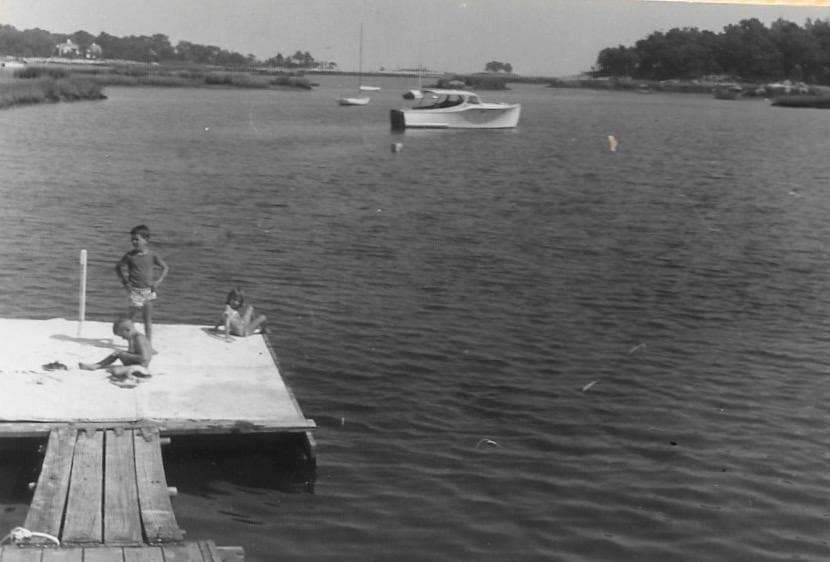
Over the years, the beach has been a common place for residents to enjoy leisure time — playing on the sand and launching kayaks, canoes, and standup paddleboards, with racks provided to store this equipment. The dock also has six boat slips for residents' use. Sand is replenished annually, and tree trimming is performed by adjacent residents.
Depression and the war years
Then came the effects of the Great Depression and no more lots were sold. With eight houses built, it remained this way until after World War II. The Zieglers never reduced the prices on the lots and seemed resolved to keep the unsold land forever, if necessary. All the roads were kept up except Whaling Road, which was allowed to return to the jungle, so to speak. By 1949, there were 4" diameter trees in the middle of Whaling Road, although the water pipe was in place waiting, like the Zieglers. In the early 1930's, Mr. Smart bought the empty sales office cottage and moved it up to the end of his mother-in-law's driveway and made it into quarters for her chauffeur.
The Salem Straits Association
An informal Salem Straits Association was formed about 1935 by opening a bank account in that name — no agreement, no by-laws, no board of directors. The person who could sign the checks put out an Assessment letter when the bank account got low, on a per-lot basis, not on an assessed valuation basis. This was because The Park Avenue Operating Co., the Ziegler holding company, contributed the same amount per lot on all the unsold lots they owned (except for the abandoned lots on Whaling Road) as did each resident — a very nice deal for the residents. The bank account was used for snow removal, road repair, and beach and dock maintenance. The same system is in successful operation today.
Postwar growth
Shortly after World War II, Thomas Robbins bought Candlewood Island and built a brick house there. Lots began to be sold and houses built. The lot on the shore just north of the beach had always been reserved by Mr. William Ziegler, Jr. because he thought his daughter would eventually want it, but in 1956 it was decided to let it go. Don Wilson bought it and very soon thereafter built his home there and moved in late 1957.
In the late 1950's, Mr. Robbins received permission from the Zoning Board to break Candlewood Island into two lots. He moved his entrance road to the north shore of the island and sold the new lot. A new house was built there in 1959.
About 1958, the rudimentary dock at the beach, built by Mr. Smart many years before, was replaced by the present 70' dock. The material and driving cost about $2,000, and all of the actual construction was done by Mr. Arthur, Mr. Arguimbau, and Mr. Ellis Gardner. It was quite a community project.
Also in the late 1950's, the Zoning Board refused to let the Zieglers sell any lots on Peabody Lane, Conant Place, Beverly Place, or open up Whaling Road unless the width of the right of way of those roads was extended to 50' from the existing 30' turn-around installed at their extremities. Furthermore, sale of lots of less than an acre would not be permitted. The Zieglers fought these decisions on the basis of a “grandfather” exemption for the original plat and survey, but lost after roads and larger (and therefore fewer) lots were completed. After approval, the pavement was widened in 1963 from the entrance up to and including the length of Peabody Lane.
On October 1, 1965, John Arthur Clarke, who had been buying lots and building houses in Darien for quite some time, bought the approximately 11 acres on Whaling Road from The Park Avenue Operating Co. and started immediately to develop it.
Caring for the community
As our community grew, the work of caring for the area was divided among residents — managing the bank account and assessment letters, looking after the beach and dock area, and maintaining the neighborhood signs.
The Association is now incorporated as the Salem Straits Property Association, a Connecticut non-profit governed by a volunteer Board of Directors. Directors are elected by the members at the annual meeting and are themselves Salem Straits residents, serving without compensation. The Board is comprised of a President, a Treasurer, a Secretary, a Vice President for Communications, and a Vice President and Dockmaster, who together oversee the Association's management, finances, and records, neighborhood communications and social events, and the community dock. Major decisions and the election of directors take place at the annual meeting, where every member household has a vote.
Today the Association is responsible for maintaining the neighborhood's private roads, clearing snow, landscaping the common areas, and maintaining the community dock.